
Taiwan is in peril
Geopolitics Expert: The Cross-Strait Situation is Even More Dangerous Than in the 1950s, "Taiwan Independence" is Constantly Courting Trouble.
Since Lai Ching-te took the oath of office on May 20 last year, he has now been in office for a year as of yesterday. Both domestic and international communities paid close attention to his "May 20" speech, but he delivered quite a bland address without mentioning cross-strait relations.
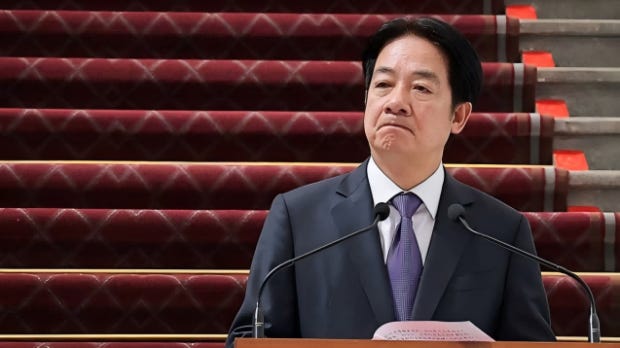
Although he didn't touch on cross-strait relations in yesterday's speech, his recent statements reveal his true intentions. Lai Ching-te's series of remarks essentially aim to promote the "Two-State Theory," claiming that the two sides of the strait are "two countries," Taiwan is a "nation," and the two must negotiate "on equal footing." His premise is "Taiwan independence," seeking to avoid conflict by hoping we tolerate his "peaceful independence." While mainland China’s negotiations are aimed at reunification, Lai Ching-te’s negotiations are focused on "Taiwan independence," which directly conflicts; how can talks proceed? Lai's stance effectively excludes dialogue. So, it's more crucial to watch his actions rather than his words from yesterday. He's a staunch proponent of "Taiwan independence," fundamentally rooted in the "Two-State Theory," actively de-Sinicizing, and eliminating any possibility of peaceful cross-strait reunification.
Meanwhile, we should focus on our own agenda, unifying any pro-reunification forces and preparing actively for post-reunification cross-strait integration; and consistently enhance our overall capabilities to ensure decisive victory if non-peaceful measures are needed to address the Taiwan issue.
Let me add a few words regarding cross-strait relations. Recently, the China Strait Research Institute released the "2025 Cross-Strait Relations Risk Index Report," which sparked significant discussion online. The report posits that the risks of cross-strait relations in 2024 have already surpassed the levels during the military conflicts of the 1950s, indicating precarious relations and the readiness of tensions to escalate. According to the report, signs suggest both sides are advancing to a new stage of understanding on Taiwan issues, making the continuation of past political and military status increasingly difficult, accelerating actions toward national reunification.
I agree with these conclusions. Despite military confrontations in the 1950s, leaders from both sides were inclined towards reunification. The Kuomintang at the time considered "counter-attacking the mainland," but they were aligned with mainland China on the "One China" issue. Politically, both were relatively equal during that time, with Taiwan's then-leader Chiang Kai-shek having been a leader for all of China. U.S. President Nixon noticed that both Chairman Mao and Premier Zhou had a certain respect for Chiang Kai-shek, referring to him as "Chairman Chiang" in private. Although militarily opposed in the 1950s, both sides recognized the legal principle of "One China," with historical ties between leaders.
Currently, the dominant force in Taiwan is the Green camp, and Lai Ching-te is a "stubborn 'Taiwan independence' advocate." There's a fundamental divide over the "One China" issue between the two sides, magnifying the conflict.
Moreover, the power balance has shifted. Mainland China now holds absolute power advantage in the Taiwan Strait, unlike the 1950s when Taiwan had some naval and air advantages, bolstered by stationed U.S. troops, maintaining military equilibrium. Now, the military power comparison favors mainland China. Despite a disadvantageous power dynamic for "Taiwan independence" extremists, they continue to provocatively seek disaster.
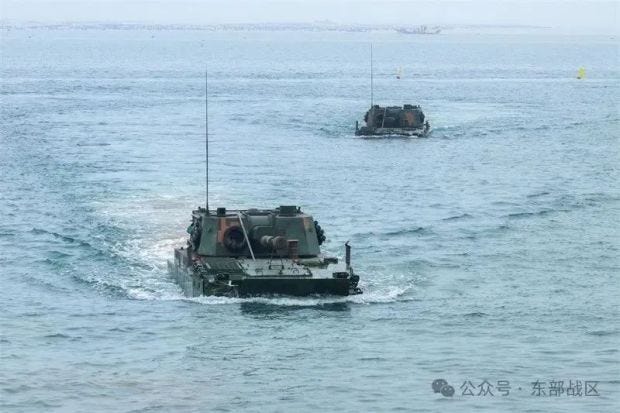
Lastly, perceptions have changed. From our leaders' perspective, Lai Ching-te is unfamiliar and lacks competence. He is completely unequal to central leadership.
Up until today, mainland China has exuded calm, employing maximum patience, sincerity, and effort in pursuing peaceful reunification, but our patience and sincerity are not limitless. "Taiwan independence" activists are persistently courting disaster, repeatedly encroaching on mainland China’s red lines, prompting potential military action and shoving cross-strait relations into peril, with tensions nearly inevitable. Should an unwanted situation arise, we will swiftly and overwhelmingly resolve it. We strive for peaceful reunification, but legally speaking, in response to Lai Ching-te's persistent "Taiwan independence" actions, mainland China is prepared for any reasonable course of action.